
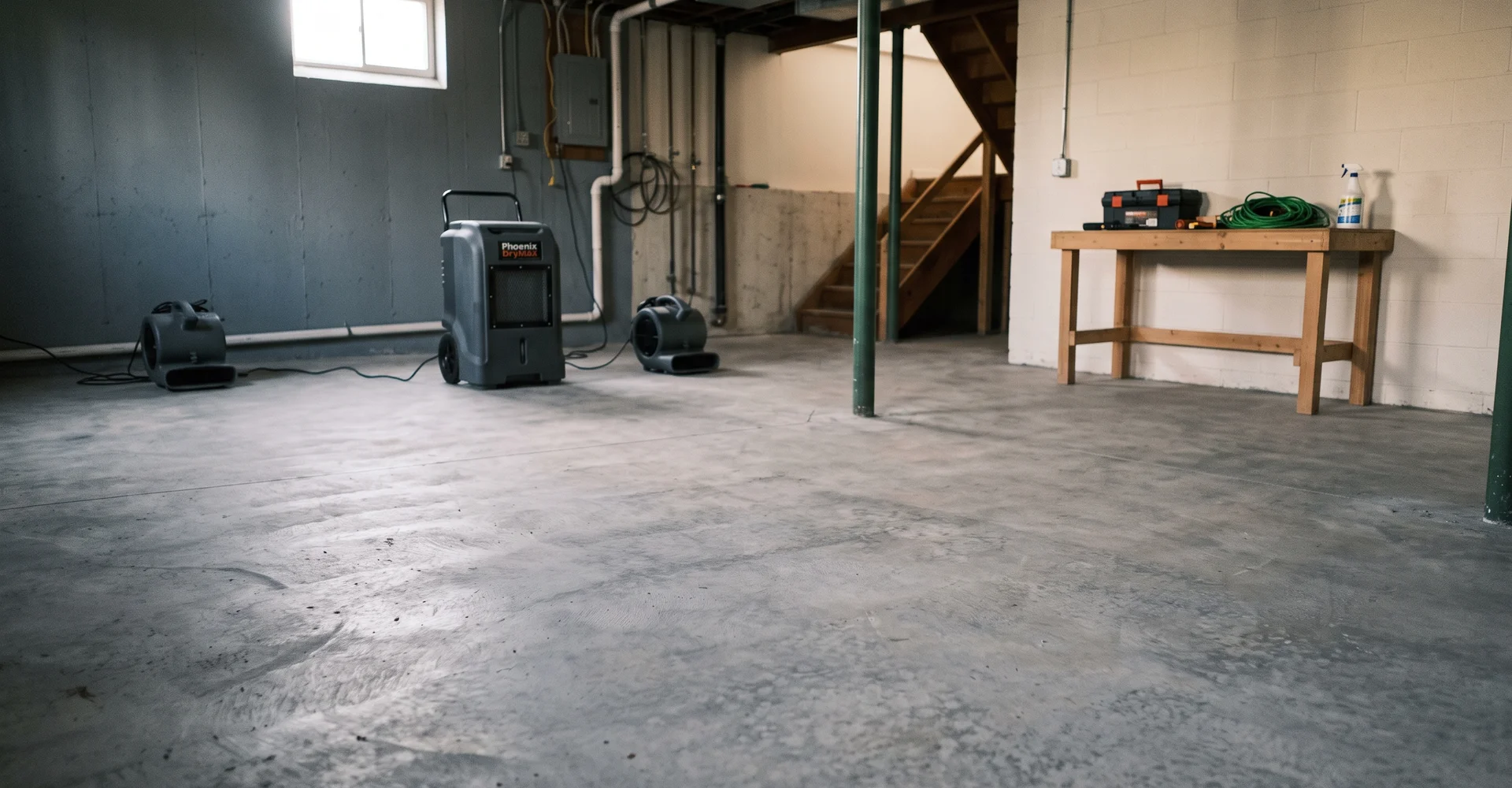
Emergency Sewage Backup Cleanup in Ottawa
Emergency cleanup and decontamination after sewage backups, using Category 3 black-water protocol with full sanitization.
- Licensed, insured, WSIB
- Unmarked vehicles
- Phone answered 24/7
Where This Usually Starts
The Problems Behind Every Sewage Cleanup Call
This is contamination, not just a mess
Category 3 black water carries E. coli, Salmonella, and other pathogens that standard cleaning will not fully remove.
Health risk to your family
Untreated sewage exposure can cause real illness, especially for children, seniors, and anyone with a weakened immune system.
Confusion about what is covered
Sewer backup coverage varies by policy, and most homeowners do not find out what is included until they file a claim.
What This Service Covers
What Is Sewage Backup Cleanup?
We provide emergency cleanup and decontamination after sewage backups caused by failed sump pumps, blocked sewer lines, and municipal surcharge, using Category 3 black-water protocol with full sanitization and disposal under Ontario Ministry of the Environment rules.
Sewage is not dirty water. It carries E. coli, Salmonella, Norovirus, endotoxins, and parasites, and it aerosolises when disturbed. Porous material that has contacted black water is non-restorable by definition, which is the part that surprises homeowners most.
We direct-bill on covered claims and assess the backwater valve as part of the job, because the useful outcome is a decontaminated basement that does not flood again next spring.
What's included
- Category 3 black-water protocol
- High-volume sludge extraction
- Full sanitization and MECP-compliant disposal
- Insurance direct billing on covered claims
- Bio-aerosol containment with negative air
- Backwater valve and sump assessment
Where we do this work
Across every Ottawa district, the Gatineau side, and up to 200 km into Eastern Ontario. Free assessments throughout the coverage area.
See service areasA flooded basement is incredibly stressful. You probably never thought you would be dealing with a sewage backup cleanup.
As a professional service team, we know exactly how overwhelming this feels.
This specific situation happens to thousands of homeowners across Canada every year.
Our team is going to walk you through the exact cleanup process we use. You will be surprised at how easy recovery can be with the right plan.
So, grab a cup of coffee, and let us go through it together.
What Should You Do Before We Arrive for a Sewage Backup Cleanup?
Stay out of the contaminated water. That is the single most important instruction, and it is the one people most often ignore because their first instinct is to start mopping.
We always tell clients to keep children and pets far away from the affected level. Breathing in these fumes or touching the surfaces can cause immediate health risks.
Our crews recommend shutting off the HVAC system right away. Moving air across contaminated surfaces is exactly how bio-aerosols reach the rest of the house.
Do not wet-vacuum the mess yourself. If the water is anywhere near electrical outlets or the panel, kill the power to that level if you can do so safely from a dry position.
Before help arrives, take these specific steps:
- Photograph what you can see from the doorway.
- Call Ottawa 3-1-1 to create an operational tracking log if you suspect a municipal issue.
- Note the exact time you noticed the backup for your insurance claim.
- Avoid touching any wet porous items like cardboard or rugs.
We recommend documenting everything before the cleanup starts because it really matters for your insurance claim. Dangerous bacteria like E. coli and Salmonella begin multiplying rapidly within the first 48 hours.
Our experts have seen too many claims delayed due to missing early photographs. Having clear evidence makes the entire approval process much smoother.
Why Is Sewage Treated Differently From Other Water?
Because of the Category 3 classification, this disaster requires a completely different approach. Under recognized guidelines like the IICRC S500 standard, water is classified by contamination level.
Black water sits at the very top of that scale. This category includes raw sewage, municipal sewer surcharge, and overland flooding.
We treat this hazard seriously because Category 3 water carries heavy health risks. The liquid contains Escherichia coli, Salmonella, Norovirus, Giardia, and other nasty pathogens.
Endotoxins also remain hazardous even after the bacteria producing them are dead. That last point is what makes surface disinfection alone totally insufficient on porous material.
| Material Type | Action Required | Examples |
|---|---|---|
| Porous | Discard and Replace | Carpet, underlay, insulation, particleboard |
| Semi-Porous | Discard and Replace | Wicked portion of drywall, upholstery |
| Non-Porous | Decontaminate and Keep | Concrete, tile, sealed hardwood, metal |
Our technicians enforce a strict rule that homeowners often resist. Porous material that has contacted black water is simply non-restorable.
The contamination soaks deep into the fibers and cannot be washed away. We can usually decontaminate non-porous surfaces in place so you can keep them.
How Does the Decontamination Run?
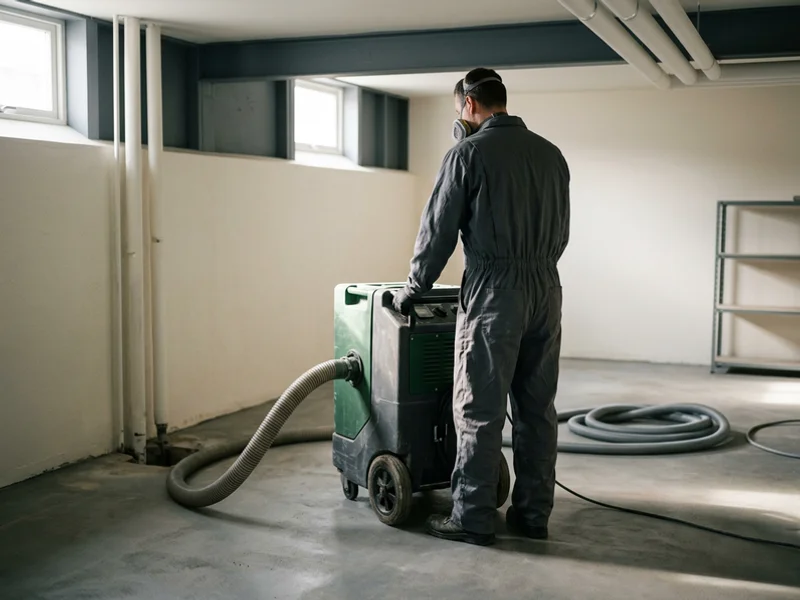
Containment always happens first. The affected area is sealed and put under negative pressure with HEPA filtration so bio-aerosols cannot migrate upstairs while people work. Crews dress in full protective equipment before anyone enters the space.
We start with high-volume extraction to remove standing water and sludge. Non-restorable material is then removed under controlled demolition.
Everything gets bagged inside the containment zone and manifested for compliant disposal. Our disposal methods follow Ontario Regulation 347 waste management rules rather than just tossing contaminated materials into a curbside bin.
The decontamination process follows these exact phases:
- Botanical Disinfection: Broad-spectrum disinfectants, like thymol-based solutions, kill 99.9% of harmful bacteria without leaving chemical residues.
- Deep Penetration: The application covers the underside of the subfloor and the interior face of exposed framing.
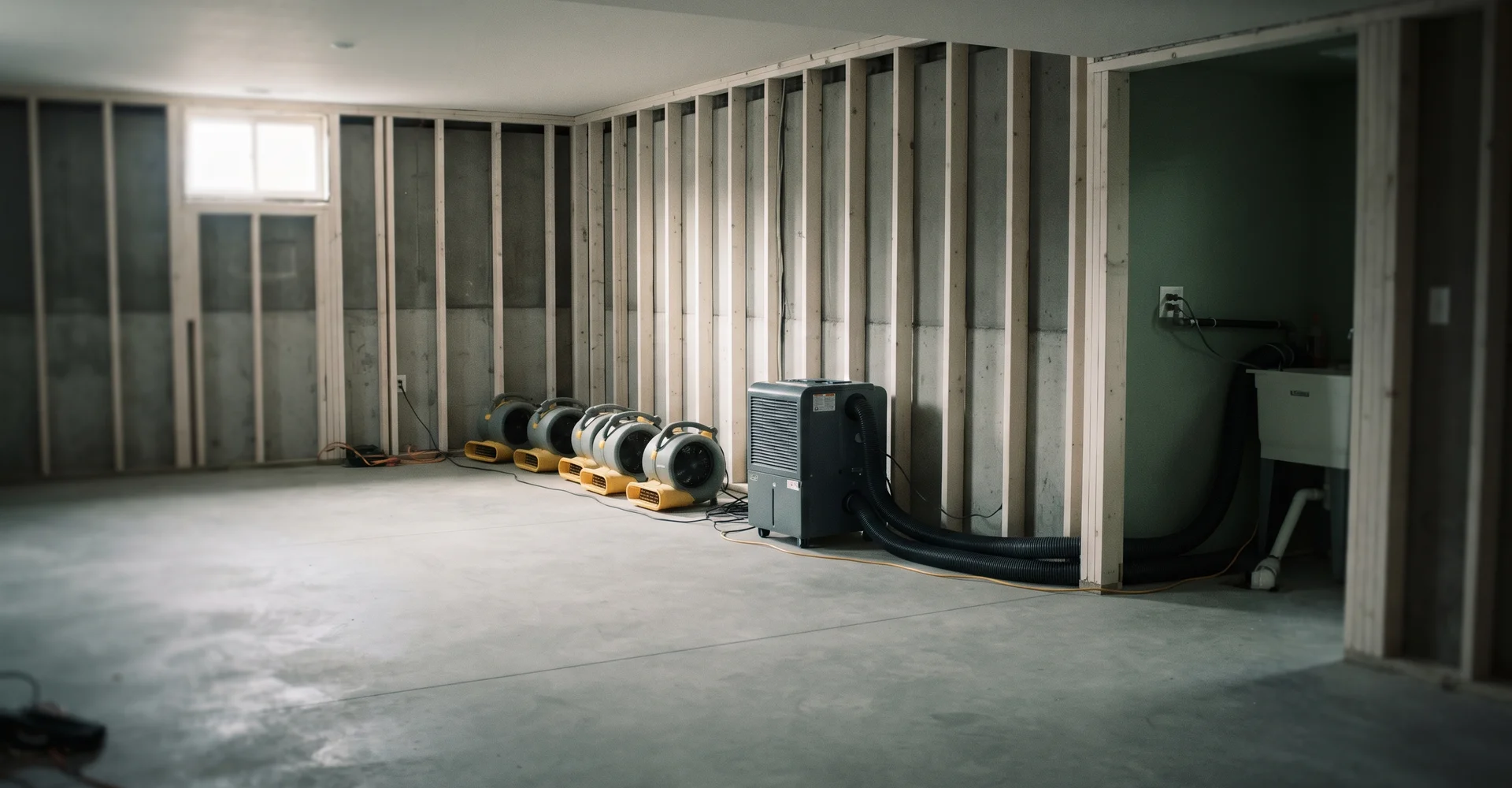
- Scientific Drying: The structural drying phase then runs under our water damage restoration protocol.
- Daily Monitoring: Technicians log daily moisture readings until the assembly reaches a verified dry standard.
Our team verifies that the area is completely safe before the rebuild begins. This gives you total peace of mind.
Why Do Ottawa Basements Flood?
Four main causes account for almost all of the emergency calls we receive. The local climate and aging infrastructure create a perfect storm for water intrusion.
Our crews saw this directly during the massive July 2026 record rainfall event. That single summer storm caused over 1,900 reported flooded basements across the city as systems failed to handle 118 mm of rain.
Sump Pump Failure During Spring Melt
A submersible pump that has run for eight years and a melt that arrives over four days is a classic recipe for disaster. This specific scenario is our single most common file, especially in Barrhaven, Kanata, Riverside South, and Orléans.
Most homeowners do not realize that the average sump pump lifespan in Canada is only 7 to 10 years. We highly recommend checking your equipment age to avoid sudden failures.
Municipal Sewer Surcharge
Heavy summer storms overwhelm combined or undersized sewers very quickly. The excess volume pushes flow backwards into the lowest connected fixture, which is usually a basement floor drain. During the July 2026 storm alone, 218.8 million litres of stormwater and wastewater overflowed the Ottawa sewage system.
Lateral Blockage
Tree root intrusion and collapsed clay laterals cause major headaches in established communities. These issues are incredibly common in older Ottawa neighbourhoods including Centretown, Alta Vista, and Westboro. Our inspectors often find that old clay pipes simply crack and invite thirsty tree roots inside.
Septic Failure
Rural properties face a completely different set of wastewater challenges. In Manotick, Kemptville, and rural Prescott-Russell, septic backups behave differently than municipal overflows. We plan containment and disposal carefully around the unique septic and well layout of each property.
What Stops It Happening Again?
A functioning backwater valve stops repeat disasters most of the time. This handy piece of hardware is a one-way device on the sewer lateral that closes when flow reverses.
Having one installed is the difference between simply watching a storm and cleaning a flooded basement afterwards. We check whether you have one and whether it appears functional as part of every single sewage file.
This quick assessment provides massive value. Our inspection also includes looking at the sump pit, the pump age, and whether there is a battery backup.
Financial help is available to upgrade these systems right now. The City of Ottawa Residential Protective Plumbing Program provides excellent rebates in 2026 to help homeowners pay for these upgrades.
| Protection Device | Maximum Rebate Amount |
|---|---|
| Indoor sanitary backwater valve | $1,000 |
| Outdoor storm backwater valve | $2,500 |
| Sump pump with battery backup (existing pit) | $1,500 |
| Sump pump with battery backup (new pit) | $3,000 |
We are not a plumbing contractor and we will not pretend to be. The best approach is to report exactly what we find so you can hire a licensed professional.
Our goal is simply to give you the information you need to protect your property. It is a small conversation at the end of a bad week, but it is totally worth having. A repeat event in the same basement is usually far worse than the first one.
Dealing with a sewage backup cleanup is never a fun experience, but you do not have to handle it alone.
Proper recovery requires immediate action to protect your property and your health.
Reach out to our team today to schedule an inspection or get emergency help. We are ready to help you restore your space quickly and safely.
Transparent Pricing
How Much Does Sewage Cleanup Cost in Ottawa?
Every project is scoped on site and quoted in writing before work starts. These are the ranges most jobs land in.
Contained backup
Limited area, unfinished basement or utility room.
Typical range $1,500 to $3,000
- Emergency extraction
- Category 3 disinfection
- Structural drying
- MECP-compliant disposal
Finished basement
Carpet, drywall, and contents affected.
Typical range $3,000 to $6,500
- Non-restorable material removal
- Bio-aerosol containment
- Full sanitization and odour treatment
- Insurance documentation
Major backup
High volume or extended contact time.
Typical range $6,500 to $10,000
- High-volume sludge extraction
- Controlled demolition
- Antimicrobial treatment and drying
- Backwater valve assessment
Sewer backup coverage usually requires a specific policy endorsement. We direct-bill where the claim is covered.
Assessments are free across Ottawa and Eastern Ontario, and nothing is added to the price mid-job. On covered claims we direct-bill most Ontario insurers.
Talk it through: 613-801-1011Why Choose Us
Why Choose Best Extreme Cleaning for Sewage Cleanup?
Treated as biohazard, not water
Category 3 protocol from the first minute, with containment and PPE rather than a wet vacuum and optimism.
Straight answers on what is lost
Porous material that contacted black water is non-restorable. We say so up front rather than cleaning it and hoping.
Prevention built in
We assess the backwater valve and sump situation so the same failure is less likely next season.
Insurance documentation
Photographic record, scope, drying logs, and disposal manifests prepared for the adjuster.
Our Process
How Our Sewage Cleanup Work Runs
-
Call immediately
Answered 24/7. Stay out of the affected area and we will tell you what to shut off while the crew is dispatched.
-
Contain and extract
The area is sealed under negative air, then sludge and water are removed with high-volume extraction equipment.
-
Remove and disinfect
Porous material that contacted black water comes out, then the structure is treated with broad-spectrum disinfectant.
-
Dry, verify, prevent
The structure is dried to standard, odour treated at source, and we assess the backwater valve and sump before we finish.
Our Work
Equipment, Method, Result
We never publish client scenes. These images show the equipment, the protective standards, and the restored condition we hand back.
How Best Extreme Cleaning Compares
| Feature | Typical provider | Best Extreme Cleaning |
|---|---|---|
| Classification | Treated as a water loss | Category 3 black-water protocol |
| Containment | None | Negative air and bio-aerosol containment |
| Porous material | Cleaned and dried | Removed as non-restorable |
| Disposal | General waste | MECP-compliant manifested disposal |
| Recurrence | Not discussed | Backwater valve and sump assessed |
Client Experiences
What Customers Say About Our Sewage Cleanup Work
Reviews from families, executors, and property managers across the region.
Our septic backed up into the basement. They contained it, sanitized everything, and dealt with the insurer for us.
Sewage came up through the basement drain during a storm. They were here the same day and handled the insurance paperwork with us in French.
Same-day crew, documented everything for our insurer, and no lingering smell at all.
Questions
Sewage Cleanup FAQs
Is sewage backup dangerous?
How much does sewage cleanup cost in Ottawa?
Does insurance cover sewer backup?
Can my carpet and drywall be saved?
Why did this happen?
What is a backwater valve and do I need one?
How long does the cleanup take?
Will the smell stay?
Still have questions?
Nothing you describe will surprise us, and nothing leaves the call. Talk to a real person any hour of the day.
Call 613-801-1011Related Services
Water Damage Restoration
24/7 emergency response for water damage, with extraction, structural drying, dehumidification, and mould prevention.
View service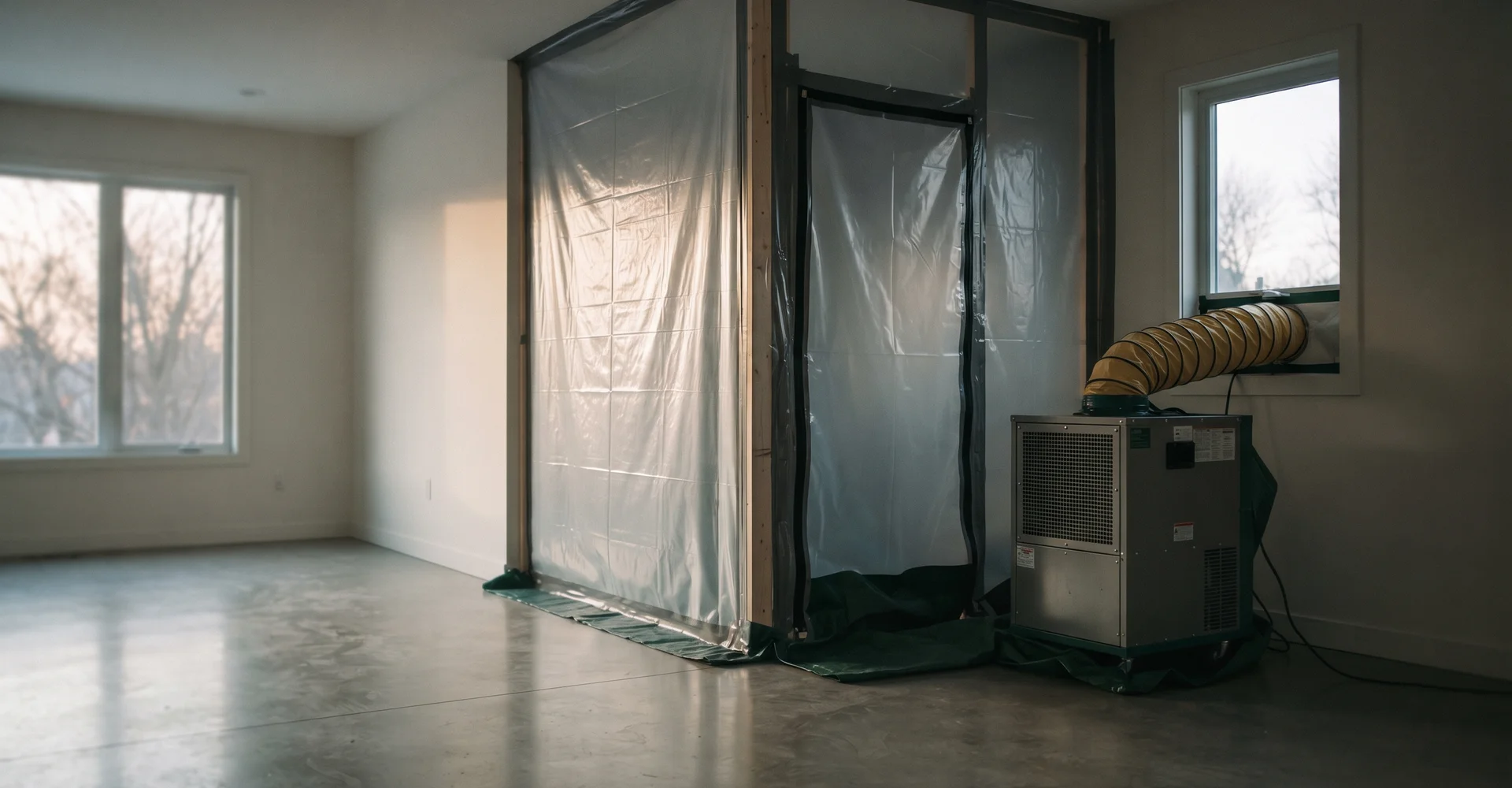
Biohazard Cleanup
Full decontamination for blood, bodily fluids, needles, and infectious waste, compliant with Ontario disposal rules.
View service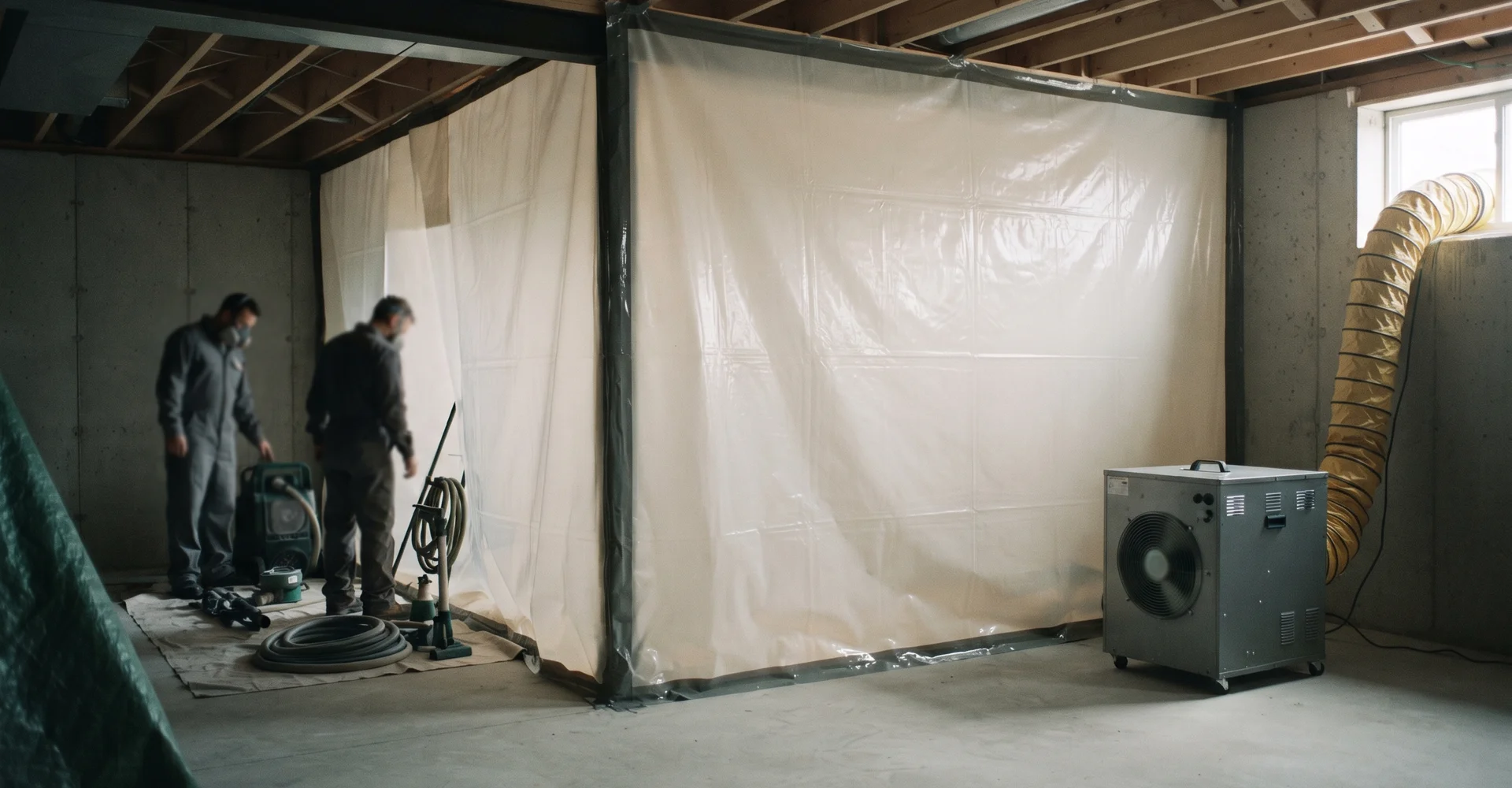
Mould Removal & Remediation
Professional containment and removal of mould, with moisture-source identification and post-remediation air quality verification.
View service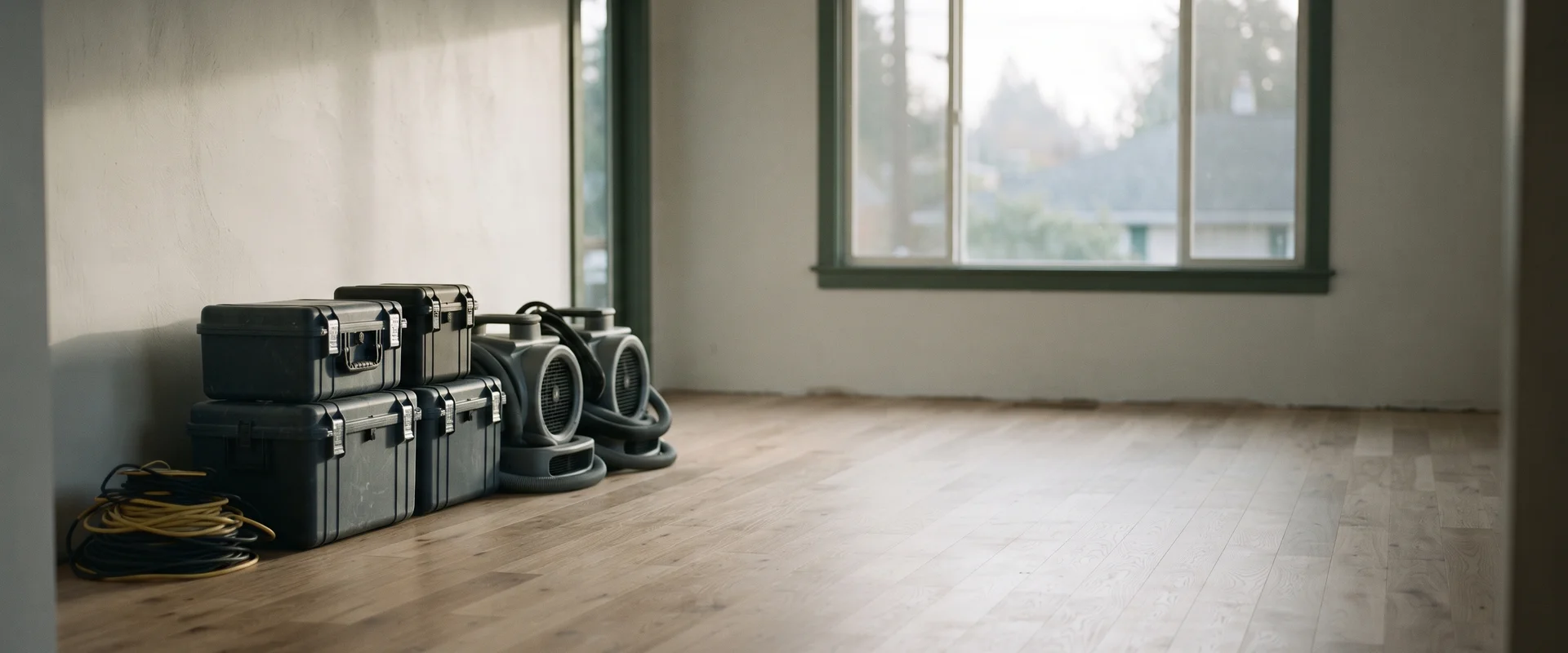
Ready to Talk About Sewage Cleanup?
Free assessment, written quote before we start, and an unmarked crew that has done this work many times before.
- Free assessment, written quote
- Unmarked vehicles, neutral uniforms
- Insurance direct billing on covered claims